New National Guidelines for inclusive aquatic facilities

New National Guidelines for inclusive aquatic facilities

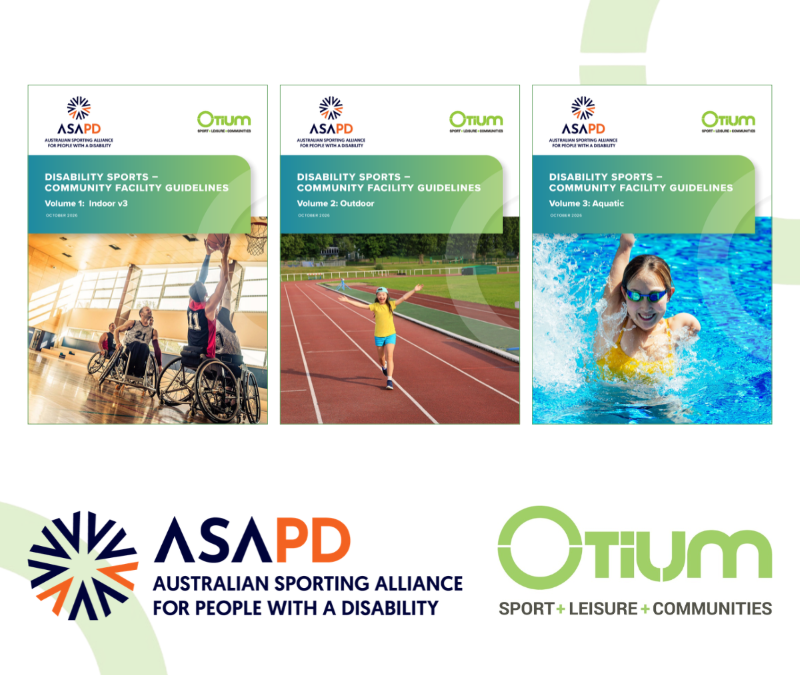
Otium Planning Group and ASAPD are proud to launch Volume 3: Aquatics of the National Guidelines for Accessibility in Australian Sports Venues, completing the three-volume Community Facility Guidelines series.

Built on the principles of respect, recognition, diversity, collaboration, integration and sustainability, the Aquatics Guidelines provide practical guidance for creating welcoming aquatic environments where people of all abilities can participate, connect and thrive.

Together with Volumes 1 and 2, now updated to include audit checklists, the Guidelines offer a comprehensive framework for planning, designing and operating inclusive community sport and recreation facilities across Australia.

Access the Guidelines here: https://otiumplanning.com/resources/

Inverell Aquatic Centre Award

Inverell Aquatic Centre Award

Congratulations to Inverell Shire Council on winning the ARI NSW Regional Facility of the Year Award for the Inverell Aquatic Centre!

This innovative facility has become a valuable community asset, providing lasting benefits for residents and visitors alike. It’s wonderful to see the vision, investment, and hard work behind this project recognised and celebrated with this award.

Celebrating the first anniversary of Otium New Zealand!

Celebrating the first anniversary of Otium New Zealand!

We’re delighted to celebrate the first anniversary of Otium Planning Group New Zealand!

Reflecting on the past year, Director Jason Merrett shared:

“I am incredibly proud of what we have achieved since establishing Otium in New Zealand. We’ve had the opportunity to work with a range of clients across the country on some great projects, sponsored two industry events, celebrated our official launch, and expanded our team. It has been a busy but highly rewarding year.”

Congratulations to Jason and the team on a successful first year. Here’s to many more milestones ahead!

Dave Lanfear Retirement

Dave Lanfear Retirement

After a long and rewarding career in sport, recreation, leisure, and community consulting across Australia and the United Kingdom, Otium Director Dave Lanfear has decided it’s time to enjoy a little more recreation himself and will retire from Otium at the end of September.

We thank Dave for his outstanding contributions to both Otium and the broader industry and recognise the significant impact his work has delivered to communities. His expertise, leadership, and jovial banter will be greatly missed by colleagues and clients alike.

While Dave may be retiring, our local Western Australian office will continue to operate on a business-as-usual basis, with our highly experienced WA team of Wayne Stuart and Daniele Lapedota led by Associate Bruce Mackay and supported by Otium’s national team to ensure a seamless transition, continuity of service, and ongoing delivery of high-quality outcomes for clients. As a national consultancy, we draw on resources, knowledge and expertise from across Australia and combine this with deep local understanding and presence to deliver the best-tailored outcomes for our clients.

Congratulations on an incredible career, Dave, and best wishes for a happy, healthy, and well-deserved retirement.

Local government reform and the impact on sport and recreation

Local government reform and the impact on sport and recreation

Local government amalgamation is often promoted as a means of improving efficiency, strengthening organisational capability and achieving economies of scale. However, Australian experience suggests that the impacts on sport and recreation are often more complex than anticipated. Evidence from Queensland and New South Wales amalgamations indicates that financial and operational efficiencies are not guaranteed, with some merged councils experiencing higher operating costs rather than the savings originally forecast.

One of the most significant challenges is the integration of councils with different standards of service. Prior to amalgamation, councils may have maintained parks, sports fields, aquatic centres, playgrounds and community facilities at very different levels. Following amalgamation, residents inevitably compare services across the new municipality and typically expect access to the highest standard previously provided by any of the former councils. At the same time, sporting clubs and user groups often expect fees and charges to align with the lowest rates historically charged anywhere in the merged area. This creates upward pressure on expenditure and downward pressure on revenue.

The harmonisation of service standards can be particularly difficult where councils have inherited different quantities and qualities of infrastructure. In many cases, amalgamations bring together communities that collectively have an oversupply of facilities relative to current and future demand. Multiple swimming pools, parks, community halls and recreation facilities that were sustainable as independent council assets can become increasingly difficult to justify and maintain when assessed across a larger local government area. Political pressure often makes rationalisation challenging, resulting in councils continuing to operate a larger asset base than required while also facing demands to improve service levels and address asset renewal backlogs.

Amalgamation can also expose underlying financial challenges. Combining a financially strong council with a financially constrained council does not automatically create a financially sustainable organisation. Deferred maintenance, ageing facilities, asset renewal liabilities and debt obligations are transferred into the new entity. In practice, the financial position of the merged council is often influenced disproportionately by its weakest inherited balance sheet rather than the average performance of its predecessors. Australian research has highlighted the risks associated with the transfer of financial burdens and liabilities through amalgamation processes.

These challenges become even greater when amalgamation occurs alongside rate capping. While community expectations typically move towards higher service levels, facility upgrades and lower user fees, rate capping restricts the council’s ability to increase revenue to fund these expectations. The result is a structural funding gap where costs associated with harmonising services, maintaining an extensive asset portfolio and addressing renewal backlogs continue to rise while income growth remains constrained. For sport and recreation services, this can lead to deferred maintenance, reduced renewal programs, declining asset quality and increasing pressure to reduce discretionary services.

The key lesson from Australian experience is that amalgamation is not a guaranteed pathway to savings. Where councils inherit different service standards, significant recreation infrastructure portfolios and varying levels of financial sustainability, the process can increase rather than reduce financial pressure. If amalgamation is combined with rate capping, the challenges are amplified, with councils often finding themselves responsible for a larger asset base, higher community expectations and fewer financial tools available to maintain service quality and long-term asset sustainability. Effective asset planning, transparent service-level decisions and realistic discussions with communities about affordability are therefore critical to the long-term success of any amalgamated council.

New National Guidelines for inclusive outdoor sporting facilities

New National Guidelines for inclusive outdoor sporting facilities

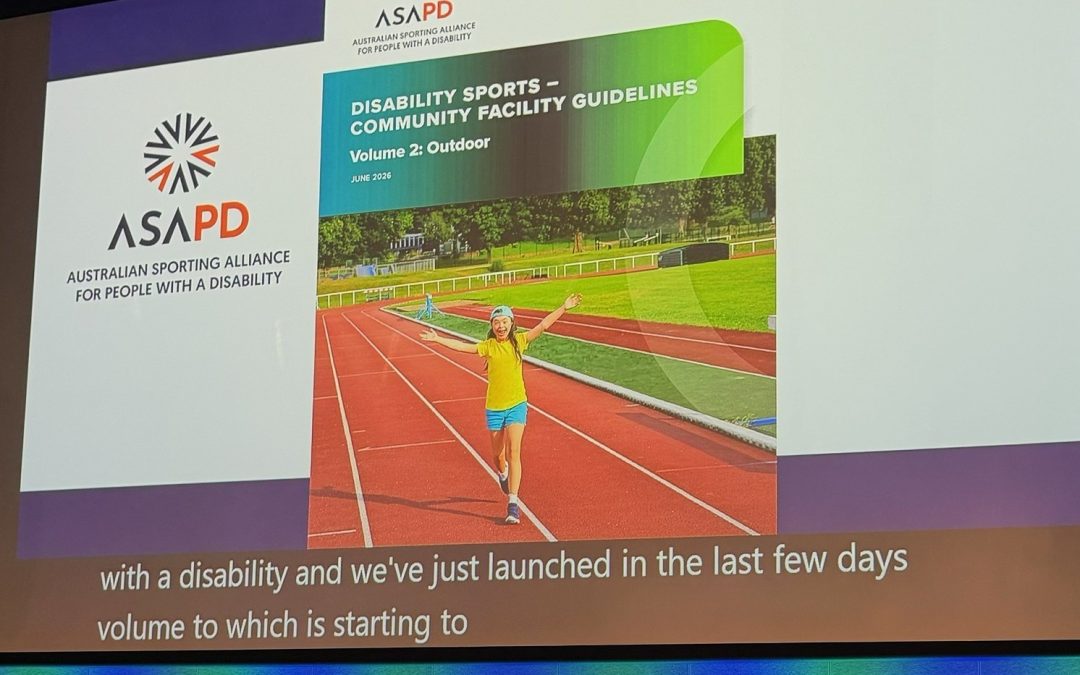
Otium Director Jason Leslie was proud to launch Volume 2 of the National Guidelines for Accessibility in Australian Sports Venues at the 2026 National Sports & Physical Activity Convention last week.

Developed in collaboration with the Australian Sporting Alliance for People with a Disability (ASAPD), the Disability Sports Community Facilities Guidelines – Volume 2: Outdoor provide practical direction for planning, designing, upgrading and operating outdoor sport and recreation facilities — helping ensure all Australians, including people living with disability, can participate.

📄 Access the guidelines here: Otium Resources

Together, these guidelines support a lasting legacy of greater participation, inclusion and accessibility in community sport for all Australians.